- the Weekly Invoice
- Posts
- Everything Just Changed
Everything Just Changed
2026 is going to be completely different and we're all totally unprepared.

Grady Teske
December 04, 2025
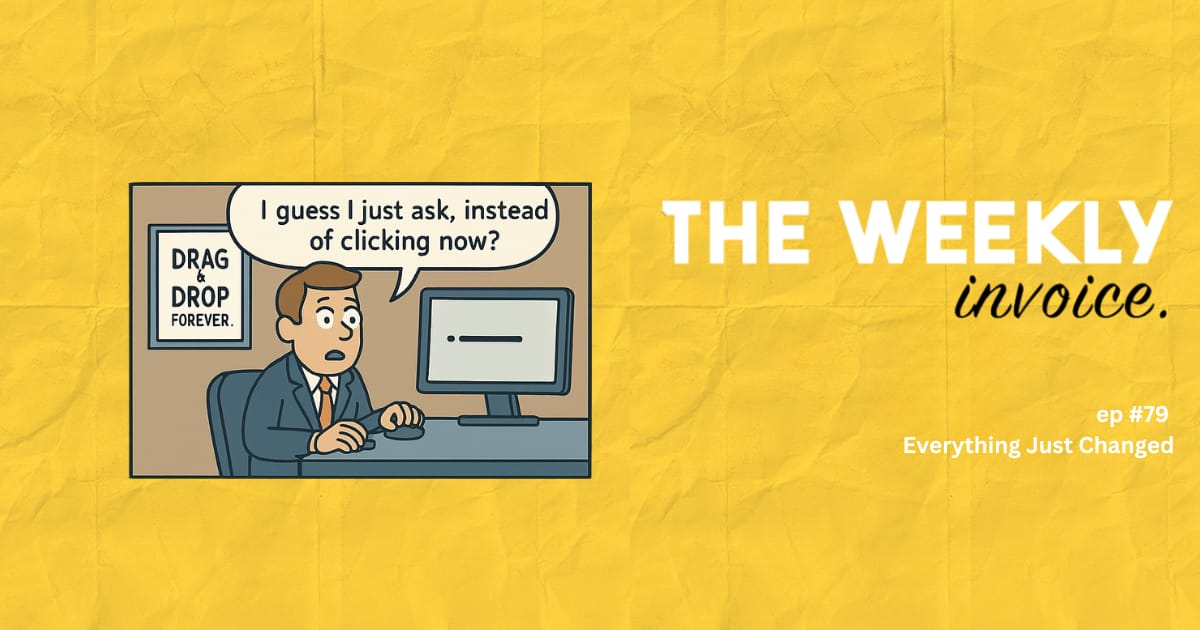
I just sat through a webinar from one of our certified SaaS partners at Rising Tides, and it floored me—not because of new features (we're already building most of those with GPT, Gemini, Claude, and N8N for clients),
but because the entire user experience had changed.
Gone were the familiar drag-and-drop boxes, menus, and screens we've stared at since the early days of WordPress and Squarespace.
Instead, everything ran through a simple prompt feed, like chatting with ChatGPT: you type what you want, and it executes. No more hunting buttons or scrolling stages—this is the end of visual-heavy digital experiences starting right now, and it's coming to all business tools fast.
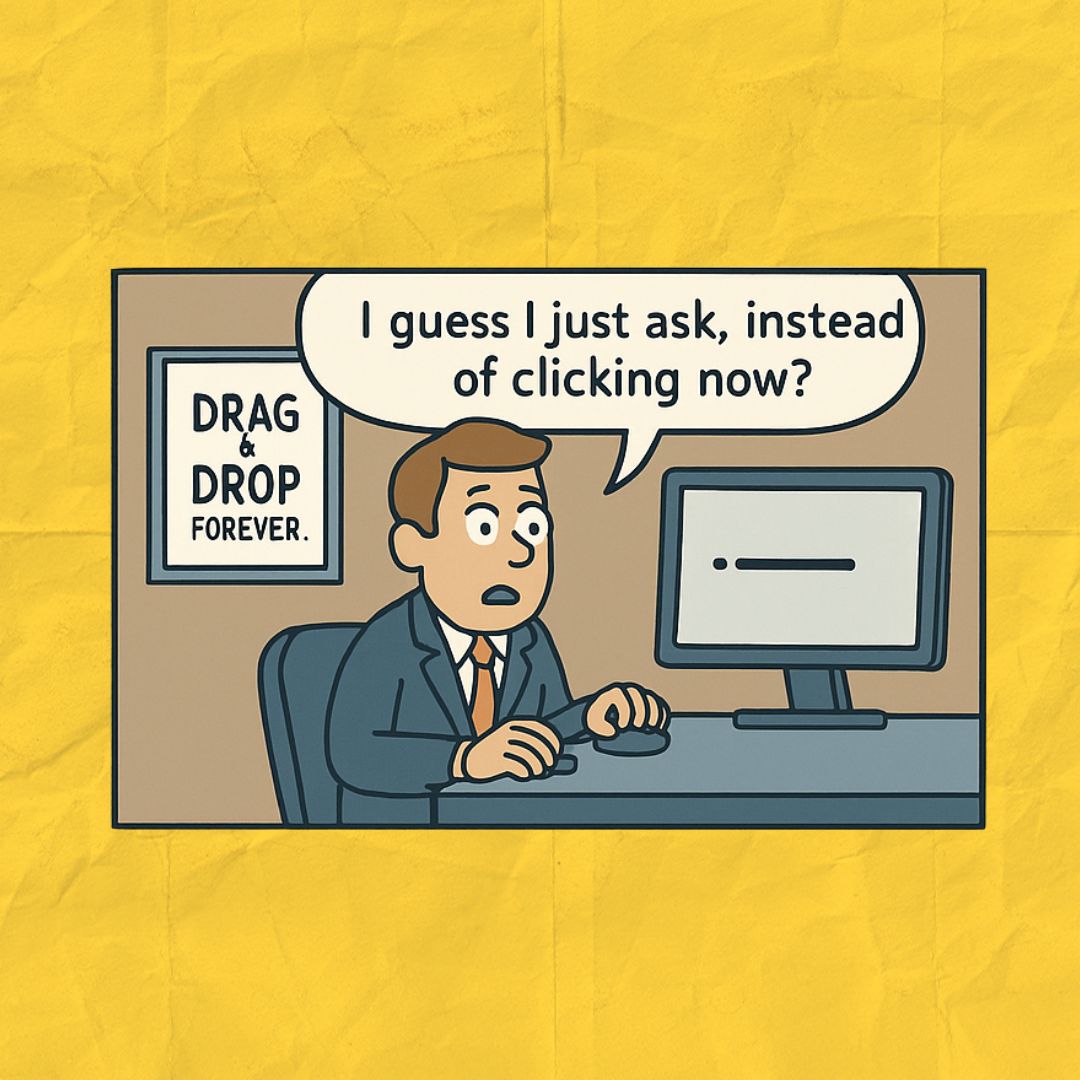
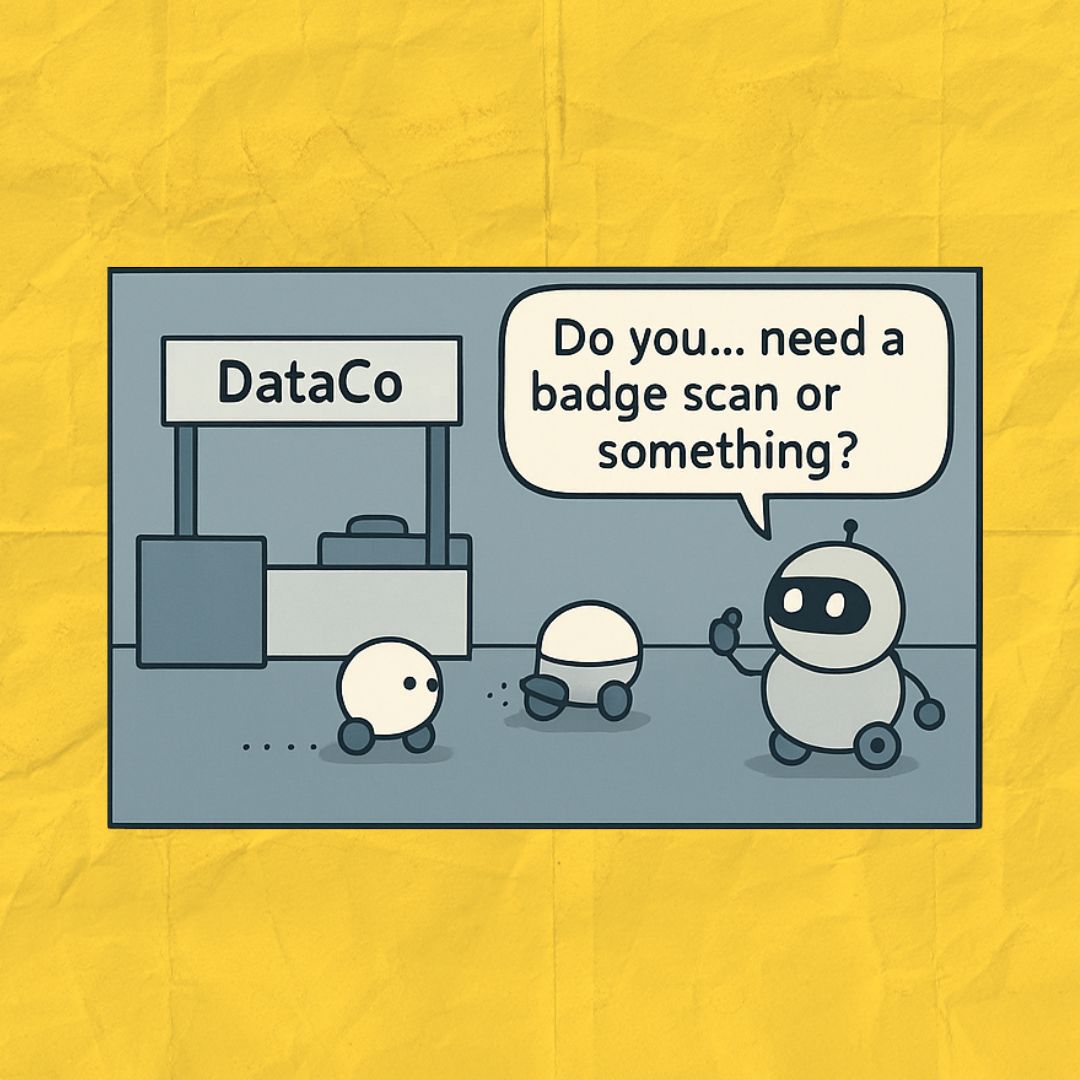
Business experiences are quietly moving away from people walking booths and watching demos, and toward software agents doing the heavy lifting in the background.
Buyers are starting to “tell” AI what they want and letting it research, shortlist, and even negotiate on their behalf—often before a human salesperson ever gets involved.
That shift doesn’t just change websites and product design; it changes where your sales team spends time, how you market, and what still matters in a world where the buyer might be a bot.
What’s actually changing
B2B buyers are already doing most of their homework without you. Studies show roughly 70% of the buying journey is now independent research, and a large chunk of that is moving into AI tools instead of Google or trade show floors. Nearly 90% of B2B buyers report using generative AI at some point in their buying process, and close to half say they rely on AI to research and shortlist vendors.
In practical terms, this means:
Your next customer may show up with a pre‑baked shortlist created by an AI assistant that has already compared you against competitors.
If your offering is not “understandable” to an AI agent—clear positioning, clean data, proof points—you may never even make that shortlist.
Human sales still matters, but more as validator and problem‑solver once the buyer is near the finish line, not as the primary source of education.
This prompt-based shift signals the bigger trend: our eyes and mouse clicks are becoming optional. Software is handing execution to agents underneath, while we just direct with words—written or spoken. It's like the original Macintosh cursor flashing, waiting for your command, but now for every business task.
What this means for trade shows and demos
Trade shows and IRL demos are not going to disappear overnight, but their job is changing. Event data for 2025 shows organizers leaning into hybrid formats, AR/VR demos, and AI-powered personalization to keep events relevant. At the same time, buyers are increasingly using AI and digital tools before and after events to decide who is worth talking to.
If AI agents are doing more of the early research:
Walking the show floor to “discover” vendors becomes less important; buyers arrive having already narrowed down options.
The booth’s role shifts from “attract strangers” to “prove you’re real, competent, and trustworthy” to buyers who already know roughly what they want.
Flashy visuals, swag, and elevator pitches matter less than being able to back up claims with concrete examples, numbers, and references that can be fed back into the buyer’s AI tools for validation.
Events become one touch in a longer, mostly digital and agent‑driven journey—less about first impression, more about proof and relationship. As prompt interfaces spread beyond this one tool to CRM, analytics, and sales platforms, the need for visual dazzle fades everywhere.
The “end” of the visual web (for work)
For work, a growing share of execution is already shifting into prompts, chat, and agents instead of clicking around screens. Analysts expect a large portion of enterprise apps to be integrated with task‑specific AI agents within the next couple of years, which means more “tell it what to do” and less “hunt through menus”. Buyers are also using AI to digest reports, proposals, and websites into quick answers: “Summarize this vendor’s pricing,” “Compare these three tools,” “Is this claim credible?”.
For a business owner or sales leader, that means:
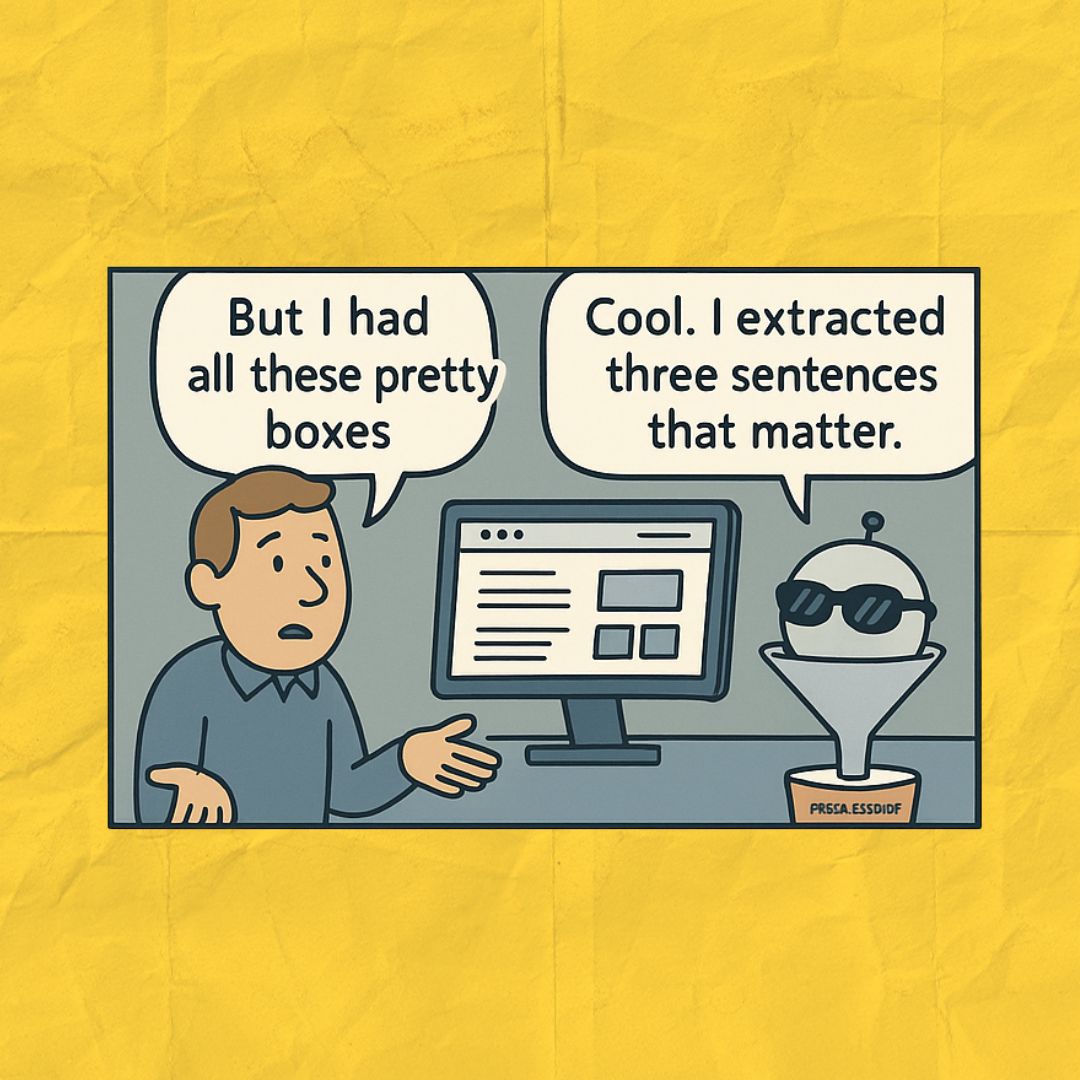
The buyer may never see most of the design work on your website; their AI reads it and turns it into a paragraph.
Long, highly designed PDFs (case studies, flyers, pitch decks) risk getting treated as noise instead of signal by both buyers and their AI helpers.
Clarity, structure, and evidence beat clever copy and pretty layouts: simple pages, clear headings, explicit claims, and visible proof are easier for both humans and AI to process.
The “end of digital visual experiences” doesn’t mean design dies; it means looks alone no longer win. The real differentiator becomes how easily a system—human or AI—can extract what you do, who you serve, and why you’re credible. This webinar was proof: even top SaaS players are ditching boxes for prompts, and it'll ripple to every tool you use.
How to adapt as a founder or sales leader
You don’t need to become a technologist to stay ahead of this. You do need to shift how you think about influence and control.
1. Speak to the agent, not just the human
Assume every serious buyer is using some mix of AI search, chatbots, and internal agents to evaluate you. Help those systems help you.
Make your positioning stupidly clear: what you do, for whom, and the outcome you create—right at the top of your site and collateral.
Structure information so it’s easy to parse: headings like “Who we serve,” “What we deliver,” “Proof and case studies,” and “How pricing works” make it easier for AI tools to extract and summarize.
Publish concrete proof: numbers, customer quotes, before/after outcomes. Buyers are becoming more skeptical of AI‑amplified hype and are explicitly looking for evidence, not promises.
If a buyer’s agent can instantly answer “What does this vendor actually do?” and “Can they back it up?”, you’re in a much stronger position.
2. Redefine the role of events and demos
Instead of treating trade shows and webinars as lead‑generation machines, treat them as credibility and acceleration tools.
Use events to validate, not introduce: assume many attendees already know roughly who you are from AI‑driven research, and focus on deeper questions, live problem‑solving, and implementation specifics.
Design sessions around “show me it works in my world,” not canned product tours. The more concrete and contextual you are, the easier it is for buyers to later “ask their AI” whether you fit their situation.
Capture and repurpose: record demos, Q&A, and customer stories in simple, searchable formats that AI tools can digest and buyers can reference later.
Think of events as a place to create rich, honest signal that will echo through AI tools, not as a one‑time performance to wow passersby.
3. Train yourself to direct, not just do
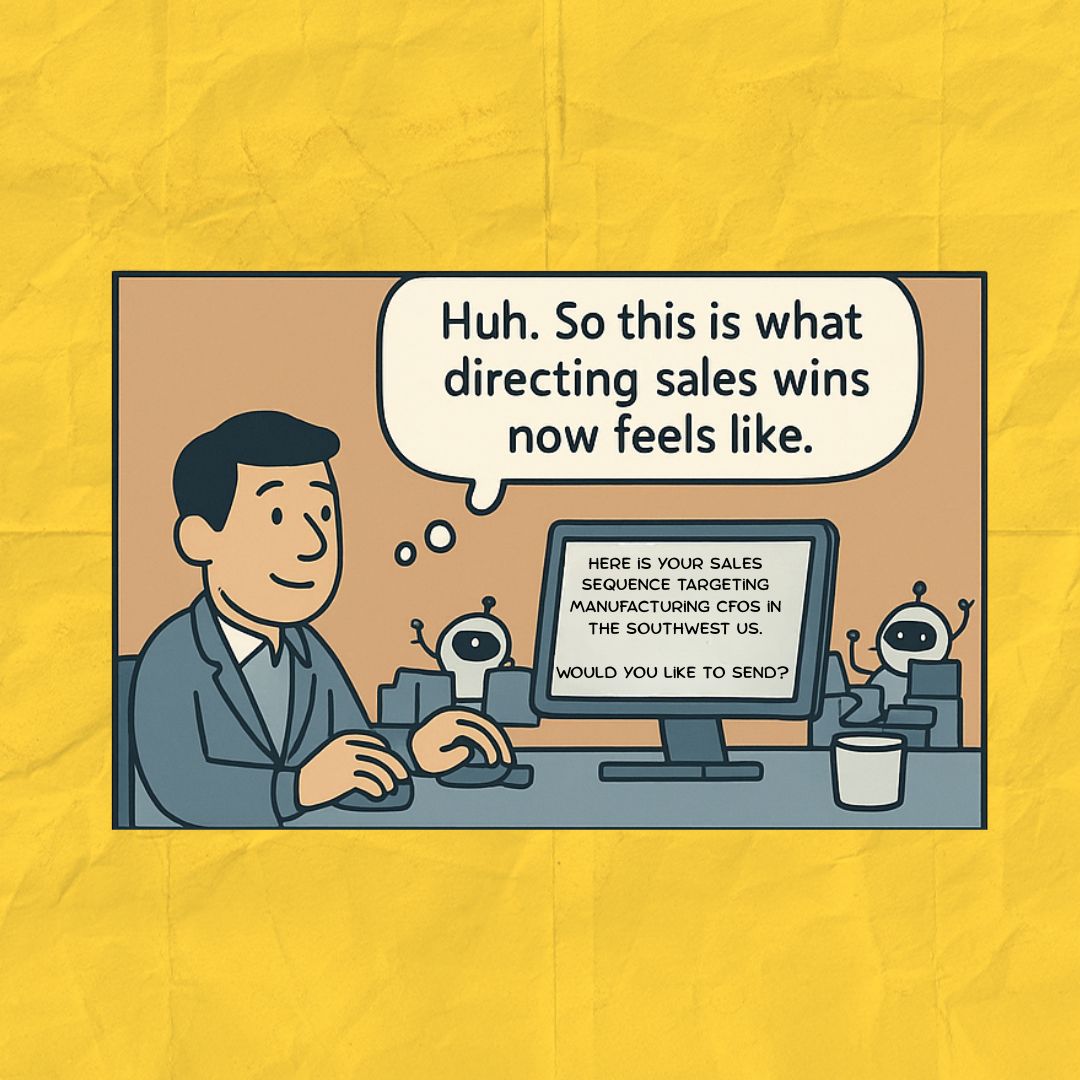
If software is handling more of the execution underneath, your job shifts from “click the buttons” to “give good instructions” and “judge the result.”
Practice giving clear prompts today: write out what you want in plain language—who it’s for, what outcome, what constraints—and use tools like ChatGPT, Claude, or Copilot to draft emails, proposals, and outreach.
Move from task lists to standards: instead of telling your team or tools exactly how to do each step, define what “good” looks like and let them (and their AI helpers) handle the path to get there.
Treat AI like a junior team member: review its work, correct it, and keep a record of what “approved” looks like so your standards compound over time.
This is the same muscle you use when leading managers instead of individual contributors—clear direction, strong feedback, and trust in the system you’ve built. That webinar prompt interface? It's training us all for this.
4. Strip the flash from your deliverables
Most sales assets today are designed to keep humans engaged over a long, messy cycle. In an agent‑heavy world, that bloat works against you.
Shorten and simplify proposals and decks; use clear sections, explicit pricing logic, and direct answers to likely questions.
Create “AI‑friendly” versions of key documents: a one‑page summary or FAQ that an assistant can easily parse and summarize for stakeholders.
Prioritize signal over style: fewer slides, fewer stock photos, more actual numbers and concrete next steps.
You’re no longer trying to entertain a room for 45 minutes; you’re trying to arm both humans and their AI with everything they need to say “yes” with confidence.
What still matters (and probably always will)
Even in the most agentic future, a few things remain stubbornly human.
Trust: For complex, high‑stakes deals, buyers still want a person they can hold accountable, even if an AI did most of the research.
Fit: No amount of automation can fully replace a real conversation about context, risk, and tradeoffs—this is where great sales leaders will spend more of their time.
Judgment: As AI gets more involved, buyers are actually becoming more cautious about inflated claims and misrepresentations, and they look for vendors who are transparent about how they use AI and what its limits are.
The oncoming trend is clear: less scrolling, more asking; fewer pretty screens, more invisible work happening underneath. As a B2B owner or sales leader, the opportunity is not to fight that shift, but to ride it—by making your business easy for both humans and their agents to understand, trust, and choose. That SaaS webinar was the wake-up call: prompts are replacing visuals, and smart founders adapt now.
Right now we’re not in position to have answers, but it’s fair to say that we’re opening up more question every day on the future of work, what it means to build relationships and the role of human connection in business.
What are your thoughts? What do you see? Hit reply and share; I’d love to feature some feedback in an upcoming post.
-Grady